Coronavirus (COVID-19) is forcing marketers to pivot strategies and navigate through the new normal. In April 2020, Sirkin Research, commissioned by NewsCred, surveyed marketing leaders in enterprise-level organizations to understand the impact of coronavirus to marketing teams around the world.
The survey covers the following topics:
- Percent of marketing workforce working remotely
- New challenges marketers face as the result of the Coronavirus
- Comparison of companies using planning and project management tools vs. those not using these tools
- New challenges marketing teams face working remotely
- Anticipated increase in marketing investments
- Anticipated decrease in marketing investments
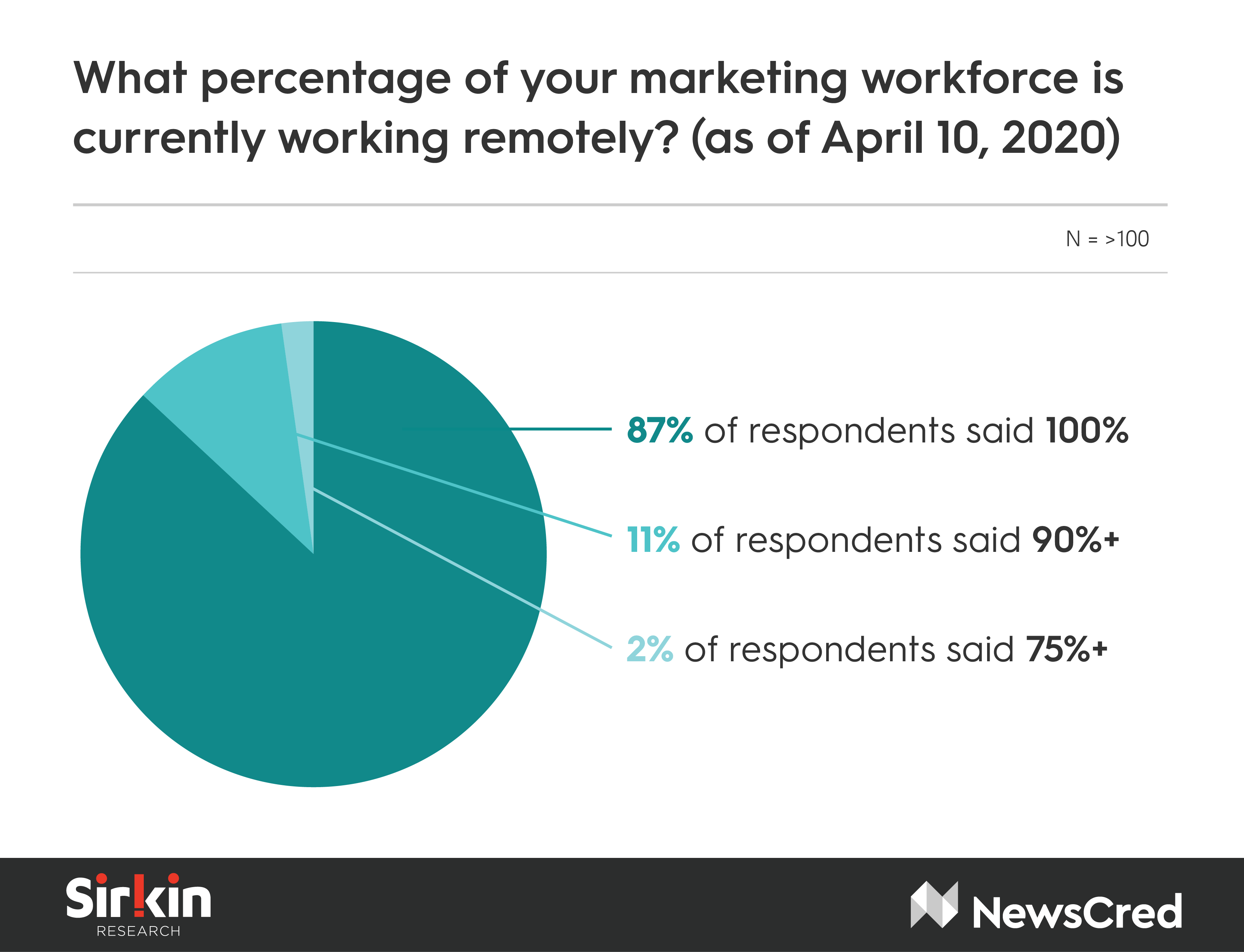
Insight #1: In 87% of companies, the entire marketing workforce is working remotely – another 11% indicated 90%+ working remotely.
As companies jump-in to protect their employees and mitigate the spread of the virus, it is clear that marketing teams have effectively stopped going into the office to plan, collaborate, and execute marketing campaigns. The implications of suddenly moving to a remote work situation, along with shifting priorities, has created a host of new challenges for marketing, which will be further explored in this research.
Insight #2: Marketers are playing catchup to shifting priorities, plans, and budgets as the result of the coronavirus.
The pandemic crisis created a host of new challenges for marketing teams as plans quickly change and evolve. In fact, 56% of survey participants indicated that managing shifting priorities or strategies as the top challenge. Another major challenge faced as the result of the pandemic is providing visibility into fluid plans. Again 48% of survey participants noted this as a challenge or significant challenge.
42% indicated that their marketing team lacked the bandwidth to quickly create new content as the result of shifting priorities with another 40%+ indicating that managing realignment of budget & people resources is problematic.

Insight #3: Companies using planning and project management tools face fewer challenges as the result of the Coronavirus vs. those that don’t use these tools.
The research also examined companies using enterprise-level collaboration and planning tools, often categorized by research analyst firms as Marketing Work Management (MWM), Marketing Resource Management (MRM), and Content Marketing Platforms (CMP) and compared these companies to those that did not have these tools. Slightly less than a third (32%) of the surveyed companies appeared to have adopted these tools.
The data suggest that enterprise-level planning and project management tools helped reduce the impact on marketing organizations caused by COVID-19. In fact, of those companies using these tools, the survey participants were 29% less likely to note realigning people resources to new initiatives as a challenge or significant challenge. Similarly, they were also 28% less likely to note providing visibility into a fluid plan as a challenge or significant challenge and 23% less likely to note managing vendors and other non-employees as a notable issue.
The benefits these tools were less prominent as they related to managing shifting priorities and remote marketing teams. The abrupt pandemic is likely the key contributor as even these companies were not immune to the abrupt shift in priorities and to marketing workforce suddenly forced to work remotely. In fact, of those companies using these tools, the survey participants were only 8% less likely to note managing shifting priorities and remote marketing teams as a challenge or significant challenge.

Insight #4: Remote work conditions surface new challenges for marketing teams & an increase in “work about work”.
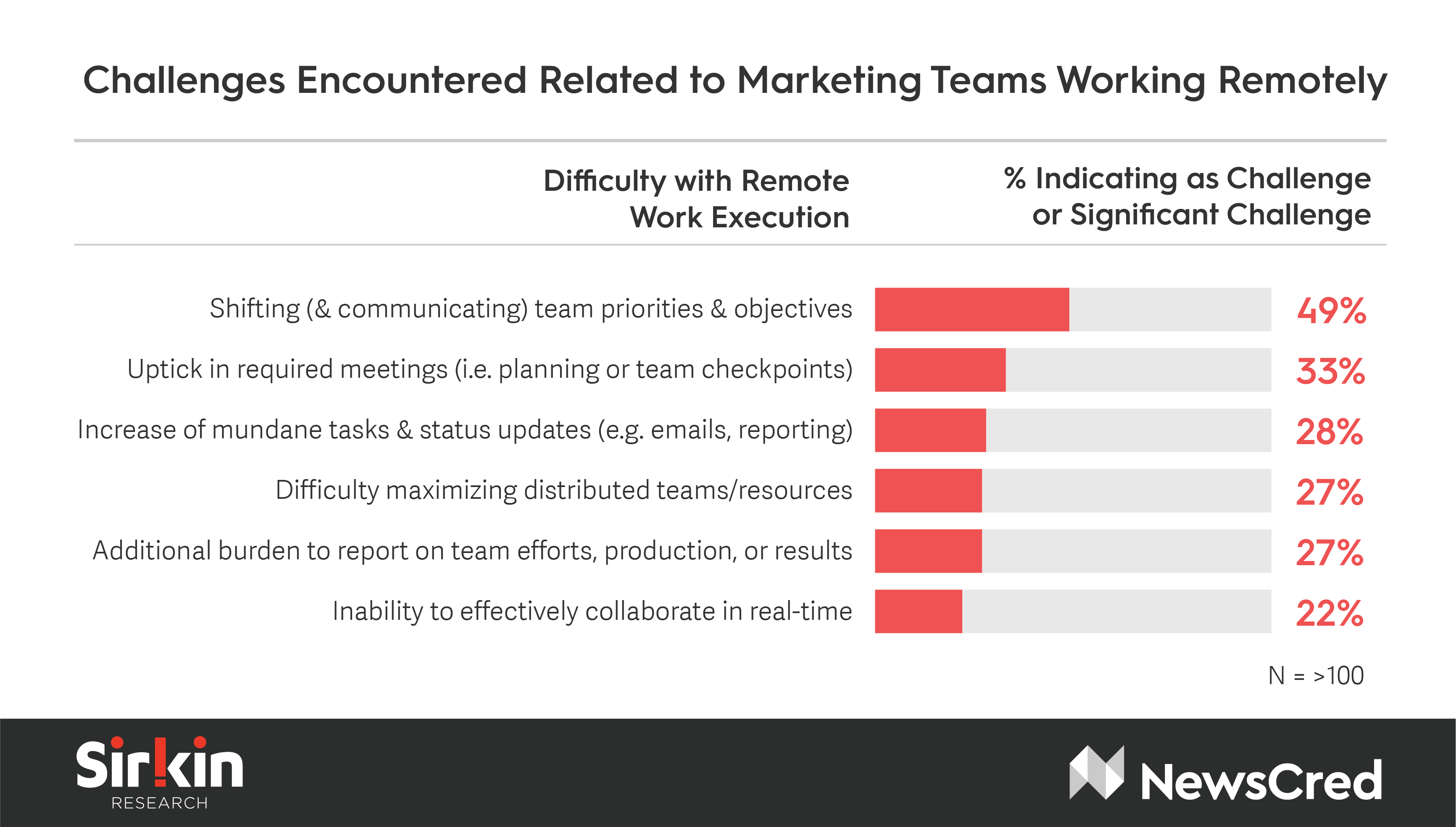
The biggest challenges marketing teams are facing during the pandemic, beyond shifting priorities, largely stem from the fact that the move to remote working was unexpected. 49% of survey participants noted shifting team priorities and objects as a major challenge they must deal with. But shifting priorities and objectives are not the only challenges they face. Work about work appears to be on the rise. 33% noted an uptick in required meetings and 28% noted an increase in mundane tasks and status updates as notable challenges.
Interestingly, only 22% noted the ability to effectively collaborate in real-time as a notable challenge. Perhaps this is a leading indicator of things to come after the pandemic?
Insight #5: Changing priorities are leading to increases in investments.
As priorities and plans shift, marketing teams are also expecting shifts in the budget.
As event and conferences come to stop as the result of the pandemic (see Insight #6), 78% of marketing leaders indicated in the survey that they expect an increase or significant increase in the creation of virtual events, and another 72% expect notable increases in web content. 67% of marketers expect an increase or significant increase in webinars. Similarly, these marketers also expect a 66% increase in social media followed by blog content at 57% and video production at 50%. Clearly, online media is becoming the go-to alternative as the pandemic continues.

Insight #6: Live events and conferences see the biggest decrease in investments.
As many digital areas of marketing are expected to increase in investments, other are areas of marketing are expected to decrease. Not surprisingly, 88% of marketing leaders indicated in the survey that they expect a decrease or significant decrease in live events and conferences.
Other less obvious areas expected to see a decrease in investments include direct mail and digital advertising – at 34% and 27%, respectively. Marketing leaders also expect a 19% decrease in investments related to premium content. This is possibly related to a downturn in lead generation actives.

Conclusion on Coronavirus Impact on Marketing
The insights from the survey tell a compelling story. Coronavirus rapidly changed priorities for marketing and is shifting budgets. Marketing is more difficult than ever during this pandemic. Marketers are scrambling to modify their execution plans and find the bandwidth and resources necessary to execute new campaigns and build new content. Compounded with working remotely, market teams’ productivity is likely on the decline as there appears to be an increase in “work about work”, such as an increase in meetings and status updates.
But necessity is the mother of invention and marketers are a resilient bunch. Marketing teams already appear to be adapting to working remotely as these teams learn to effectively collaborate in real-time using online video. They are already taking steps to drastically change their execution plans and realign resources & budget.
The data suggests that companies who were early to adopt planning and project management tools, often characterized as Marketing Work Management (MWM), Marketing Resource Management (MRM), and Content Marketing Platforms (CMP) are facing fewer challenges as the result of the Coronavirus compared to those who have not adopted these software technologies. This makes logical sense as these tools are designed to provide increased visibility and control into the overall marketing workforce, both for internal employees and non-employees and agencies, and help with planning, budgeting, and management of shifting priorities.
About the Survey
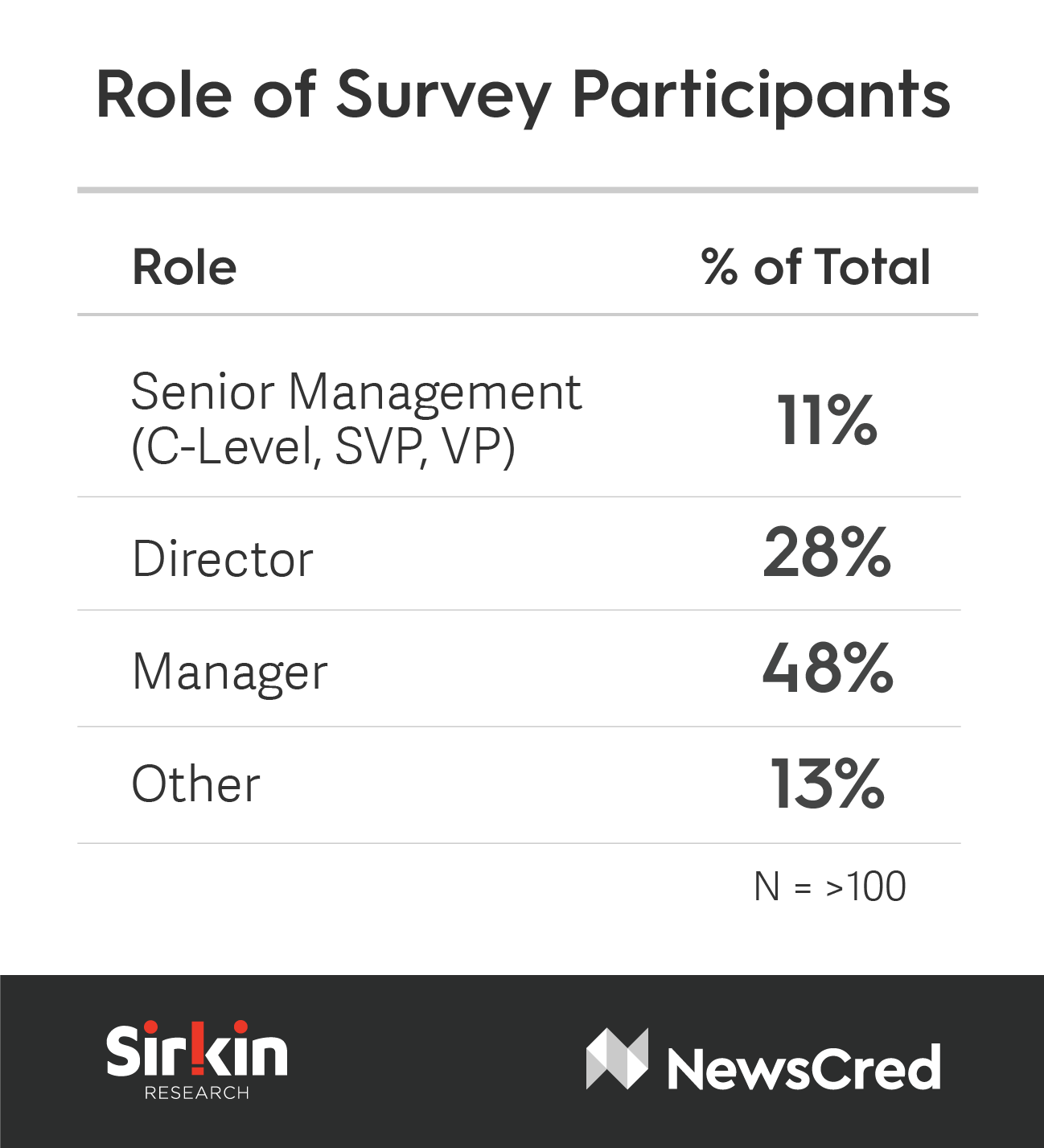
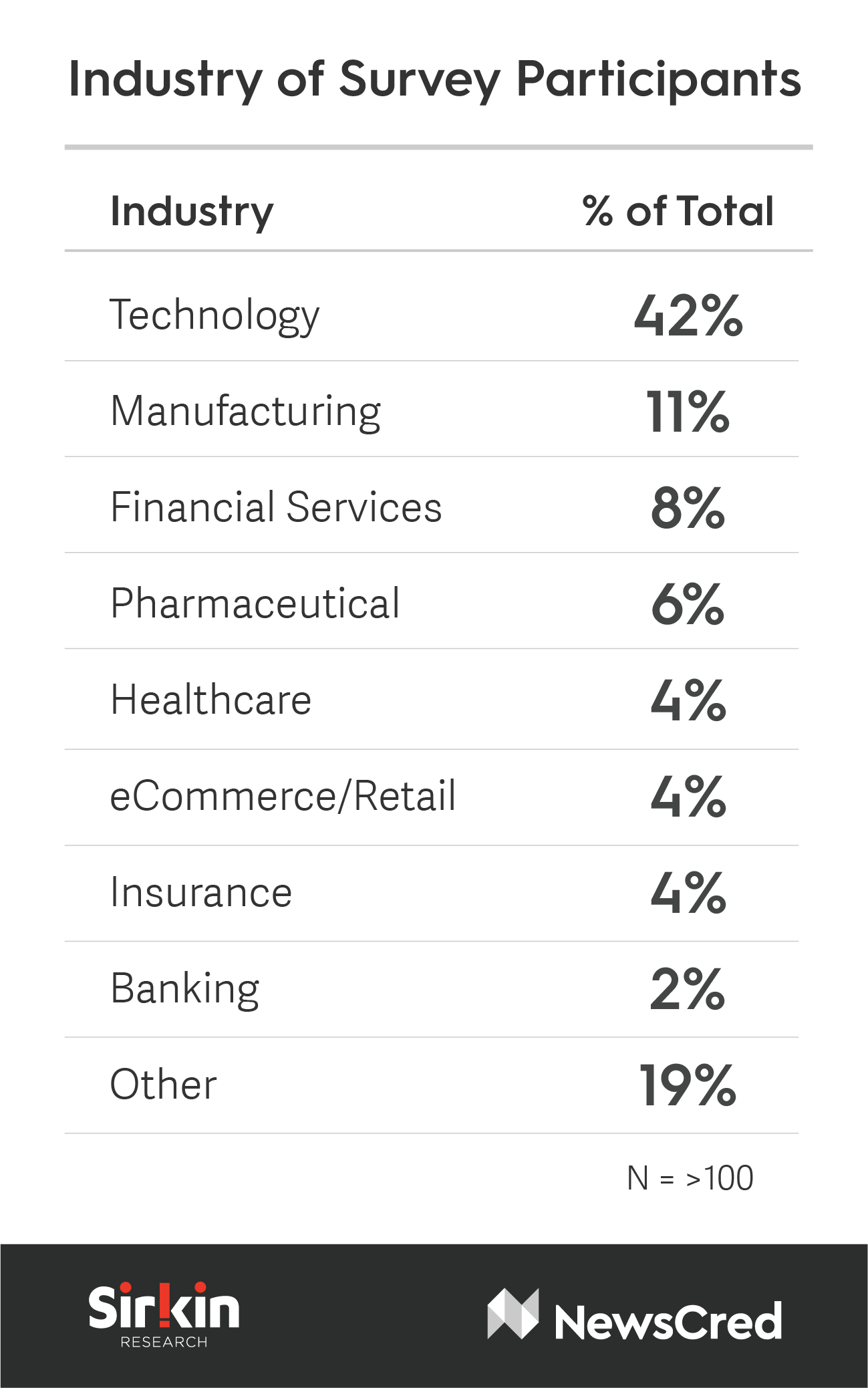
The survey targeted marketing leaders in large, enterprise-level organizations with the vast majority in excess of $1 billion in revenue. Most of 100+ companies participating in the survey were international companies with offices in North America, the EMEA Region, and the APAC region. The survey covered a large range of industries from Technology and Manufacturing to Financial Services, Healthcare, and Insurance, to name a few.
The data used to identify companies using planning and project management tools came from ZoomInfo technology insights, not from the survey participants directly.
About NewsCred
NewsCred unleashes the potential of marketing by unifying and empowering teams to work better together. Purpose-built for the complexities of marketing, NewsCred’s Marketing Work Management software accelerates campaign execution and content production by enabling the entire marketing organization to collaboratively plan, produce, and manage campaigns and content. Used by Twitter, Fidelity, Cisco, USAA, among others, NewsCred also offers the industry’s leading Content Marketing Services to help brands deliver high-performing content at scale.
Founded in 2008, NewsCred has partnered with hundreds of the world’s best marketing organizations to provide unprecedented control and visibility, enabling them to improve operational efficiency, create exceptional content, and elevate marketing results.
Learn more at www.newscred.com.
About Sirkin Research
Sirkin Research is focused on conducting primary research and delivering rich data insights to guide better decision-making for businesses. Located in Philadelphia, PA, USA, Sirkin Research has over 15 years of experience working for some of the largest global technology and financial brands in the world. The firm’s work spans the globe from Copenhagen to London to New York. Sirkin Research is a brand of Arras Consulting, www.arrasconsulting.com.

The post The Impact of Coronavirus (COVID-19) on Marketing Teams appeared first on Insights.
from Insights https://ift.tt/3ciTPAx
via IFTTT
Comments
Post a Comment