Holy cats, 2020 has been a crazy year. And it’s not over yet. (cringe)
But for all the terrible things this year has besieged us with, it’s also revealed something encouraging. We — as individuals, but perhaps more remarkable as organizations — are capable of adapting to change on a much faster time scale than we previously expected.
“Digital transformation” has been a hot topic for at least a decade. For companies at any real scale though, their plans for transformation were frequently mapped out in years. And as they started that journey, those years typically stretched into even more years.
This resistance to change was totally understandable, given human psychology, but also given the trade-off of short-term economic incentives for many businesses relative to longer-term strategic moves with outcomes clouded (get it?) in the misty future.
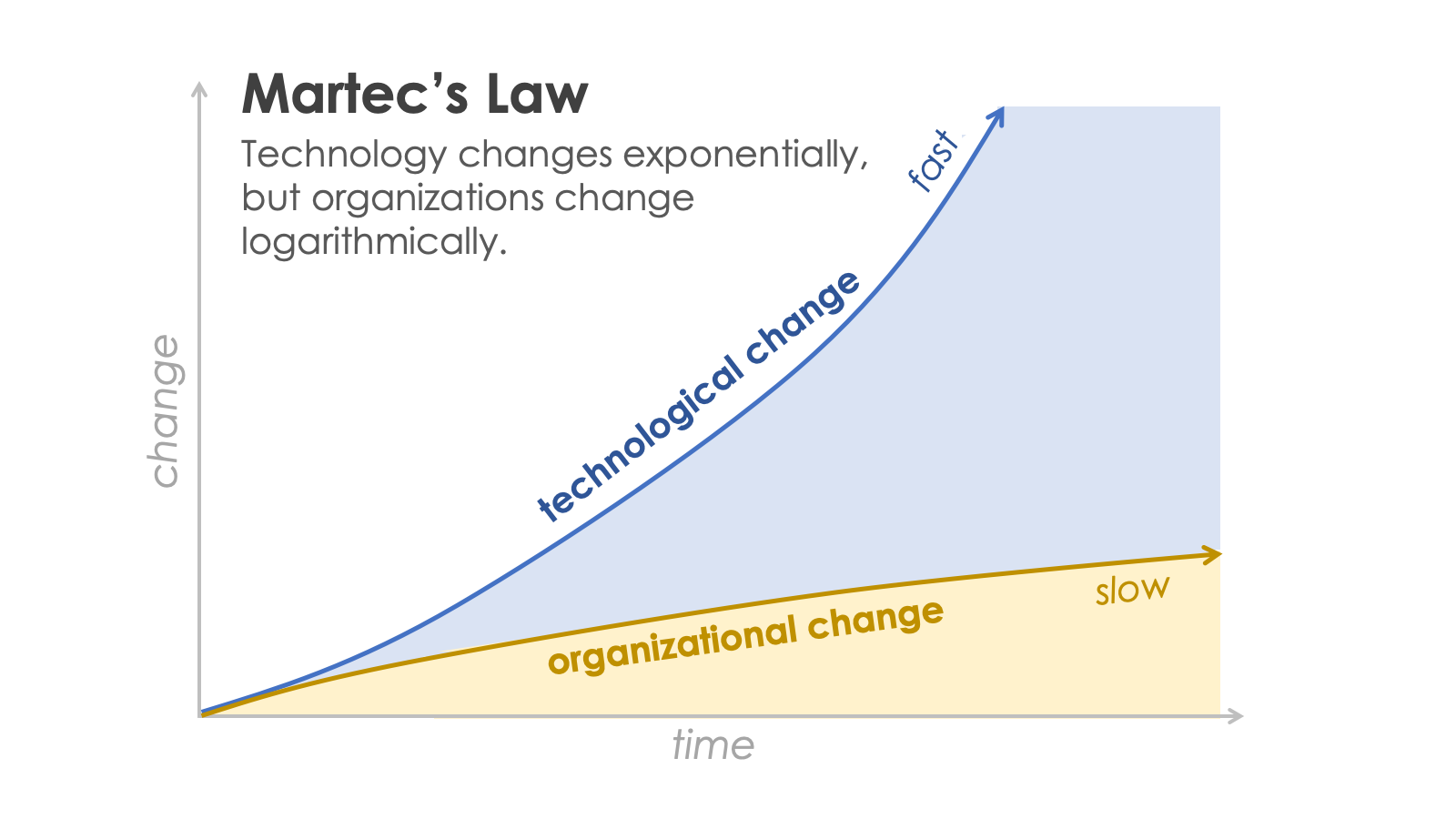
In fact, this inertial force resisting change was so prevalent in dragging down digital initiatives that it inspired my Martec’s Law observation: technology changes exponentially, yet organizations change logarithmically:
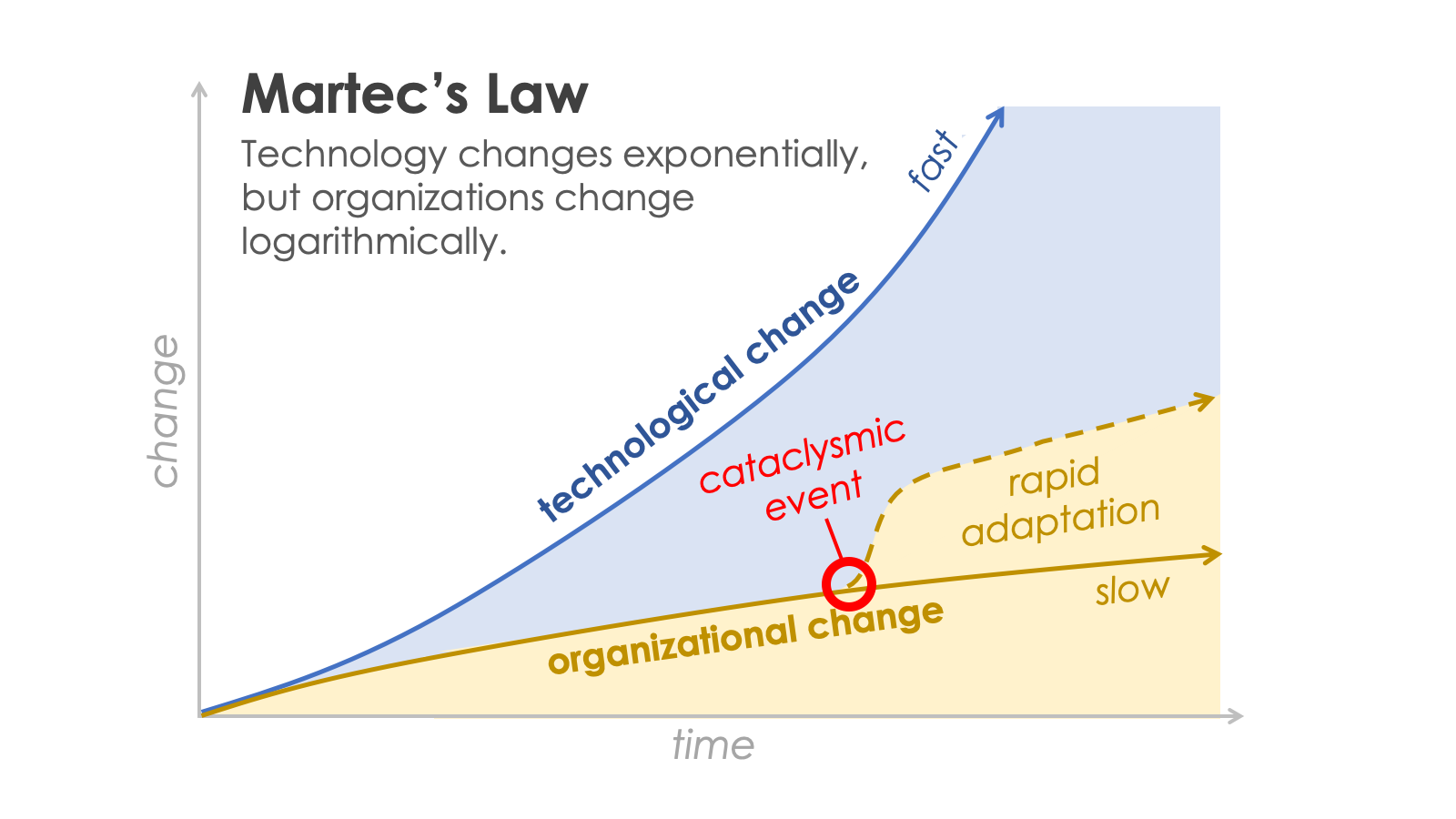
But as illustrated in the revised graphic at the top of this post, this year has given us a mountain of evidence that a cataclysmic event can force significant change in a very short period of time. Weeks, instead of years.
In evolutionary science, this known as punctuated equilibrium, the theory that species don’t adapt so much in a gradual, continuous manner, but rather make evolutionary “jumps” when some sudden change forces dramatic adaptation.
I’m reasonably confident that you’ve witnessed this in your own organization over the past few months — or seen it in others that you know. But here are a couple sources of data that testify to this dynamic.
First, from Twilio’s COVID-19 Digital Engagement Report:
“For the last twenty years, companies have been gradually transforming themselves with digital technologies to adapt to new realities of the Internet and mobile. You’ll often hear brands discussing their ‘digital transformation’ initiative. Digital transformation roadmaps could be anywhere from a year to ten years. Then COVID-19 hit.”
From 2,569 companies that Twilio surveyed, 97% reported COVID-19 had sped up digital transformation — and 68% said it sped up by “a great deal.”
In the context of digital communication strategy, companies reported that responding to the new circumstances of the pandemic accelerated their digital communications strategy by 6 years on average:
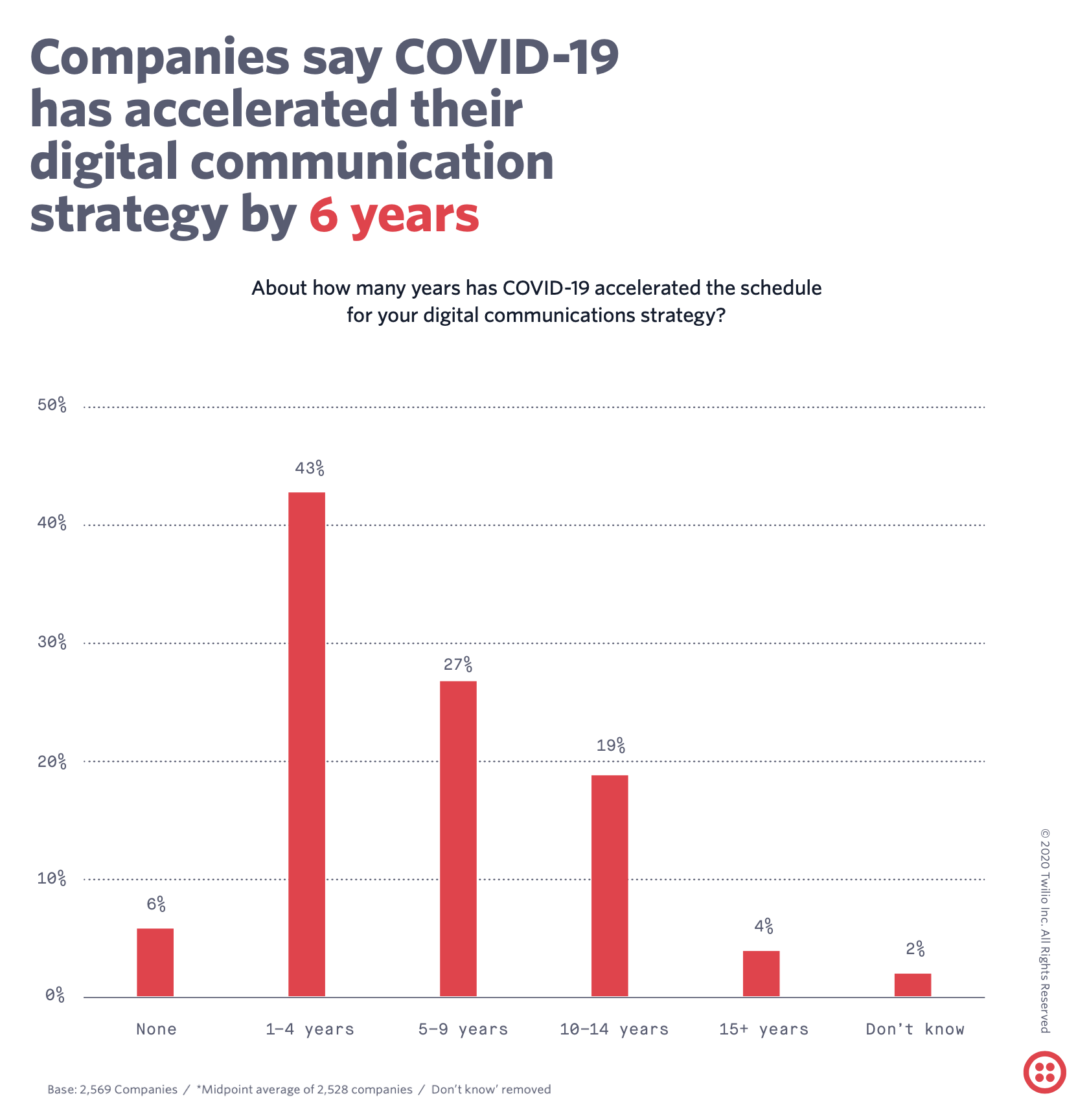
Yes, that’s years of acceleration in a matter of months.
How exactly did this happen? Twilio’s study found that the crisis removed a ton of barriers to change — reluctance to replace old solutions, insufficient budget, lack of time, bureaucracy, etc. — all in pretty short order:
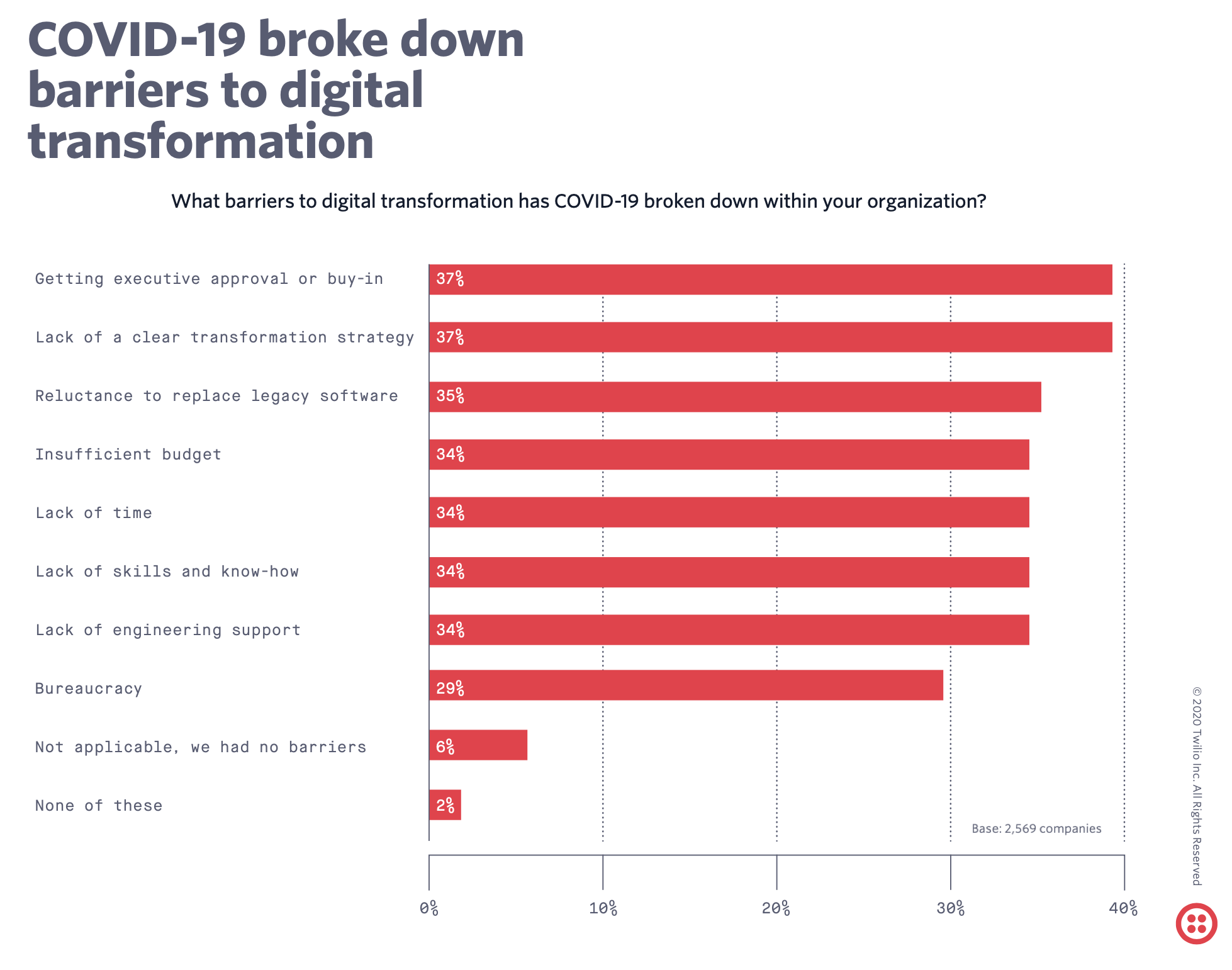
We can’t do things… until we must.
As another point on the curve, a McKinsey article titled The Quickening (is this a Highlander reference? in a McKinsey article?) showed how US e-commerce penetration had experienced 10 years’ worth of growth in just three months:
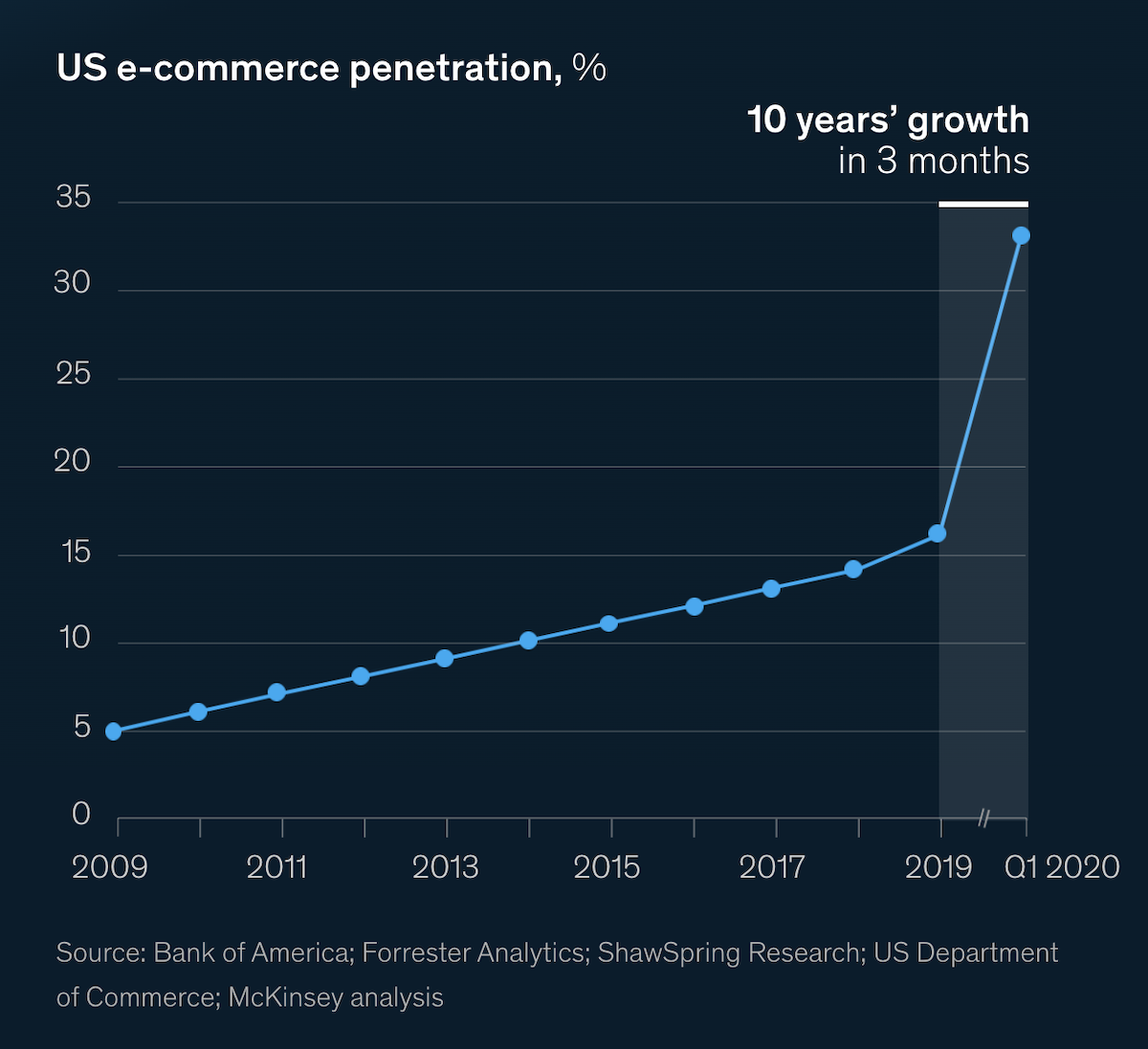
“Well, of course, it did” you’re probably thinking. “How else were people going to buy things in quarantine?”
But the point here is that both e-commerce brands and many traditional brands adapted very quickly to absorb this explosion in demand through digital channels.
I’m not saying this rapid change has been easy. But collectively, we’ve done it. And we’ve done it under very stressful (personal and professional) circumstances.
So when we come out on the other side of this pandemic, will our expectations of how quickly we can change our organizations be recalibrated?
I think yes. You?
P.S. This line from the Wikipedia entry on punctuated equilibrium is the kind of snarky humor that almost makes we wish I’d pursued a career in academia:
Some critics jokingly referred to the theory of punctuated equilibrium as “evolution by jerks”, which reportedly prompted punctuationists to describe phyletic gradualism as “evolution by creeps.”
Almost.
The post Bending Martec’s Law: 2020 has taught us we’re more agile than we thought appeared first on Chief Marketing Technologist.
from Chief Marketing Technologist https://ift.tt/3llyLyN
via IFTTT
Comments
Post a Comment