I’ve been on the trail of “no code” martech these past couple of weeks, covering event-triggered marketing automation as a no code programming paradigm and mapping a partial taxonomy of over 75 no code tools.
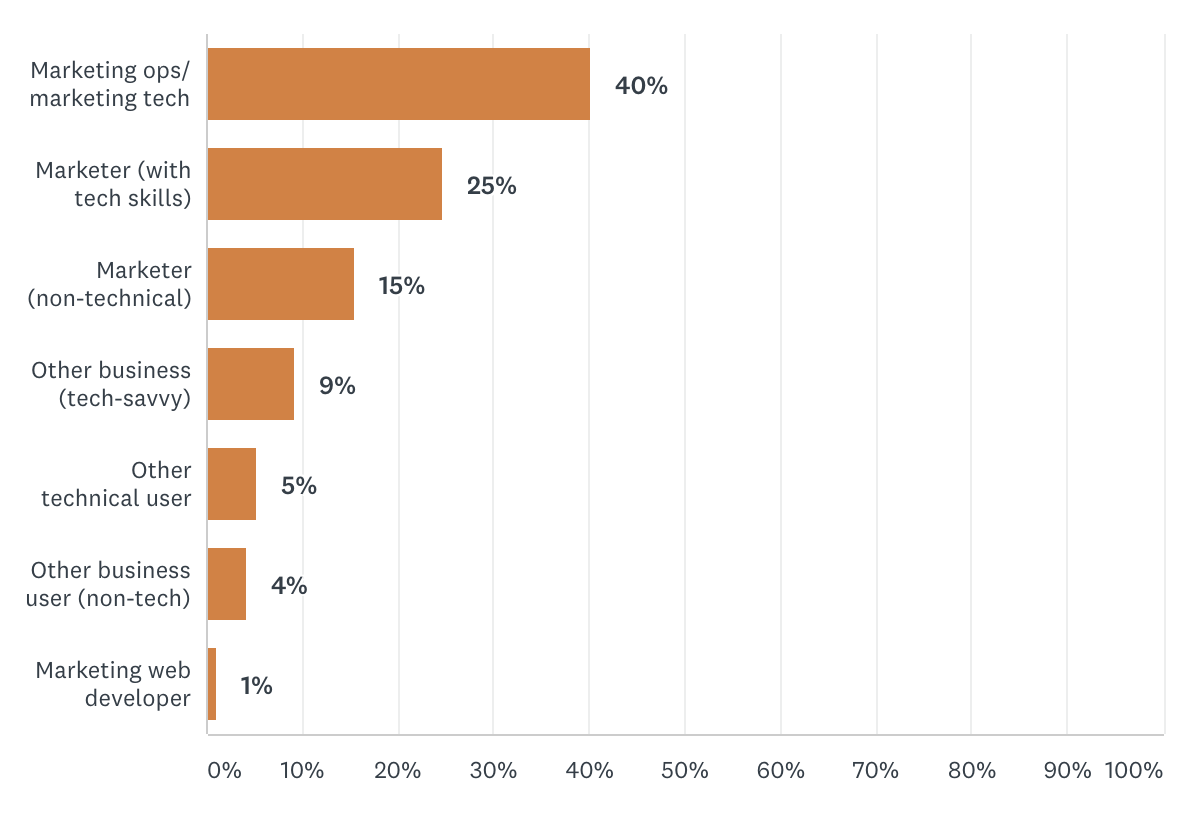
I also ran an impromptu survey of no code usage with readers, the results of which I’m sharing here. Given that my audience is mostly marketing operations and martech pros — and the savvy CMOs who love them — the data is skewed through that lens. Out of 97 respondents, 40% identified as marketing ops/marketing tech and 25% as tech-savvy marketers (both flavors of marketing technologists).
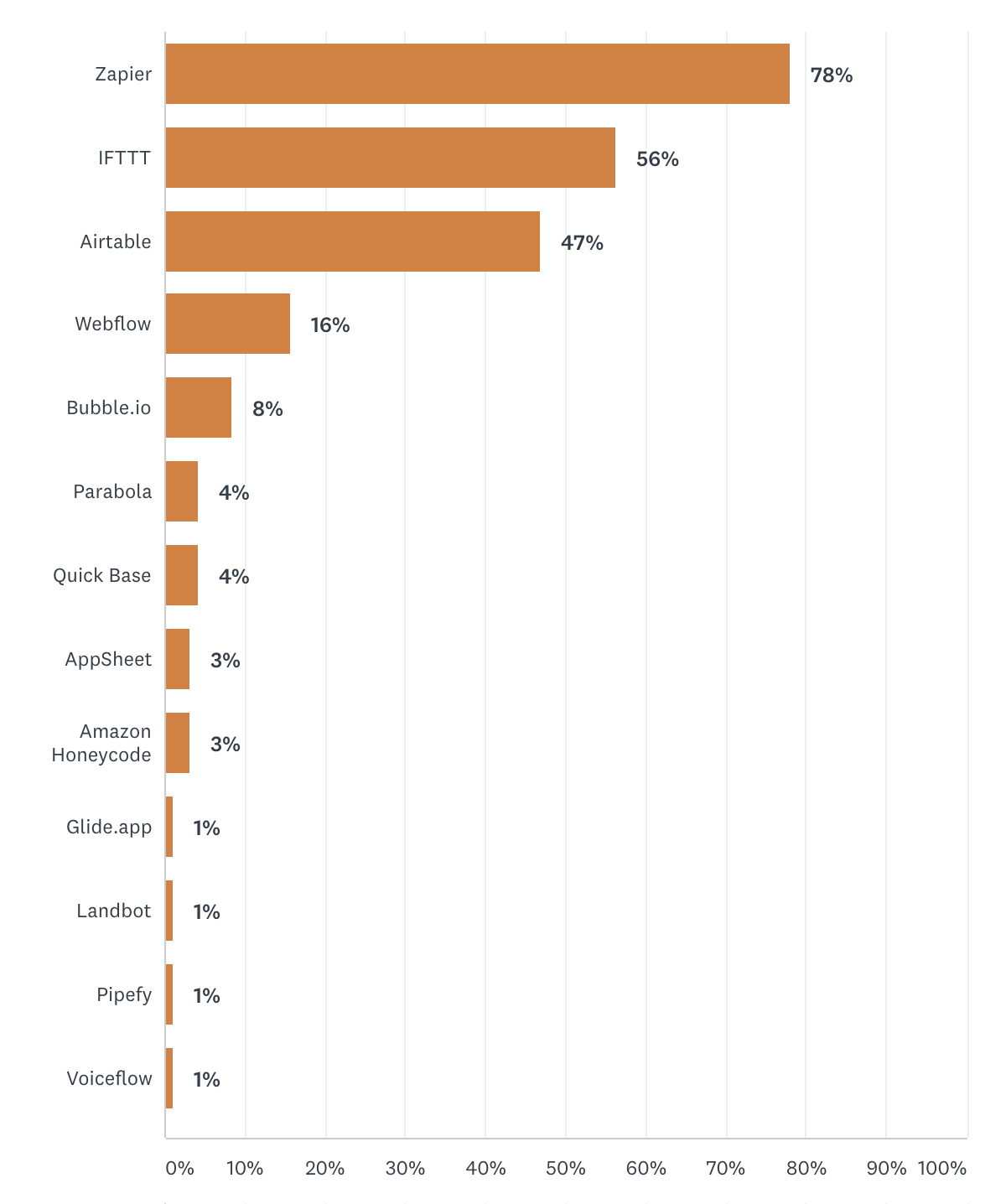
As you can see from the chart at the top of this post, Zapier is by far the most popular tool used by this audience, followed by IFTTT and Airtable. From there, it stretches into a long tail of less commonly adopted no code products.
Given the above, it’s not surprising that the primary no code use case reported in our survey was implementing workflows and processes (82%), often across multiple apps and platforms within a martech stack. Next most popular, but significantly lower at 37% and 35%, were publishing web forms and setting up databases. Essentially: collecting, routing, and storing data.
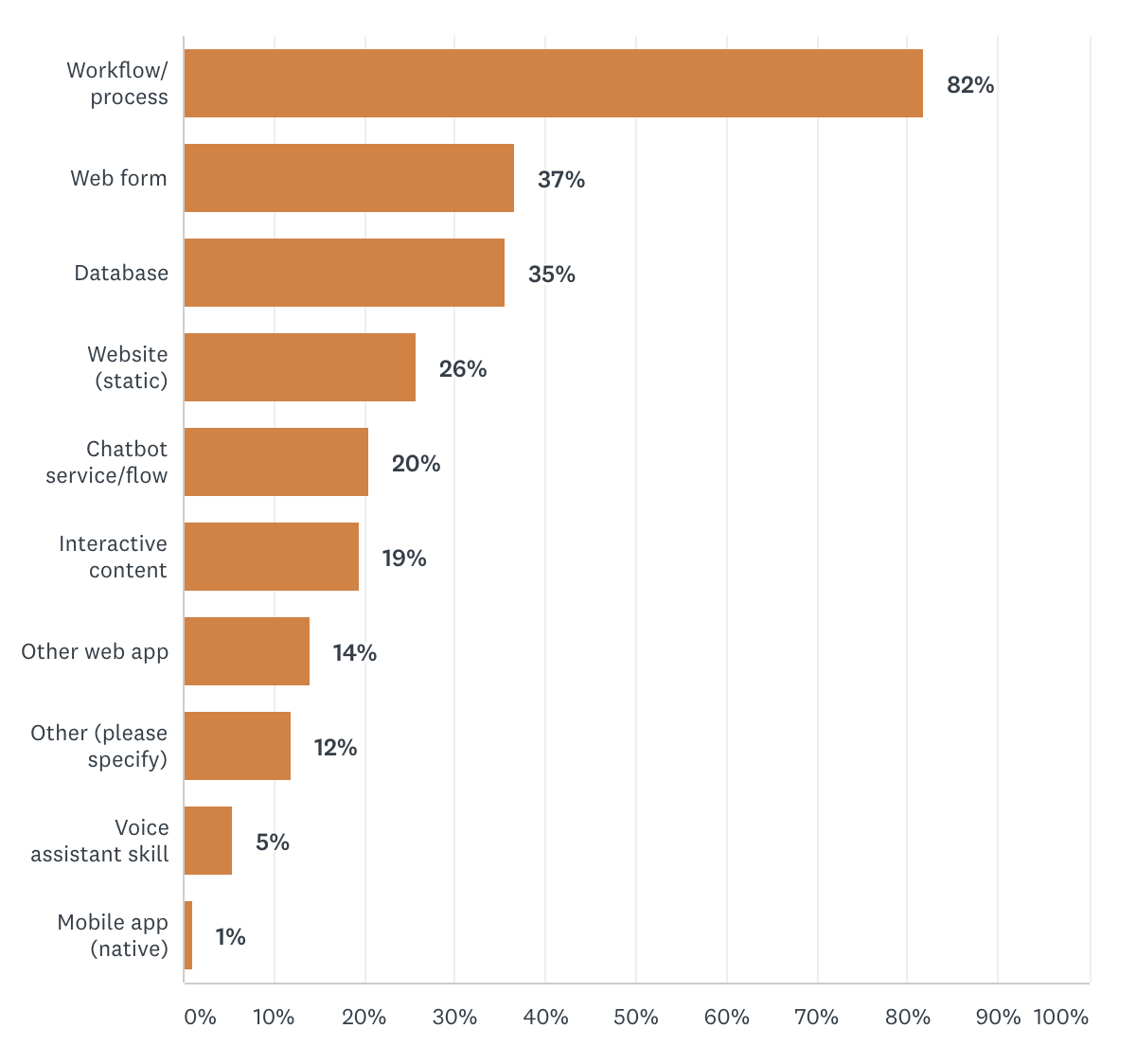
Less common with this audience was building websites, chatbot flows, interactive content, and other web apps. There may be plenty of marketers creating such things with no code tools, but not so much in the domain of marketing operations. As our study of job responsibilities of marketing technologists revealed earlier this year, those activities are probably more in the camp of brand/demand builders and marketing web developers.
This is further bolstered by the data that 67% of the participants reported using no code tools for the purpose of building internal apps and workflows.
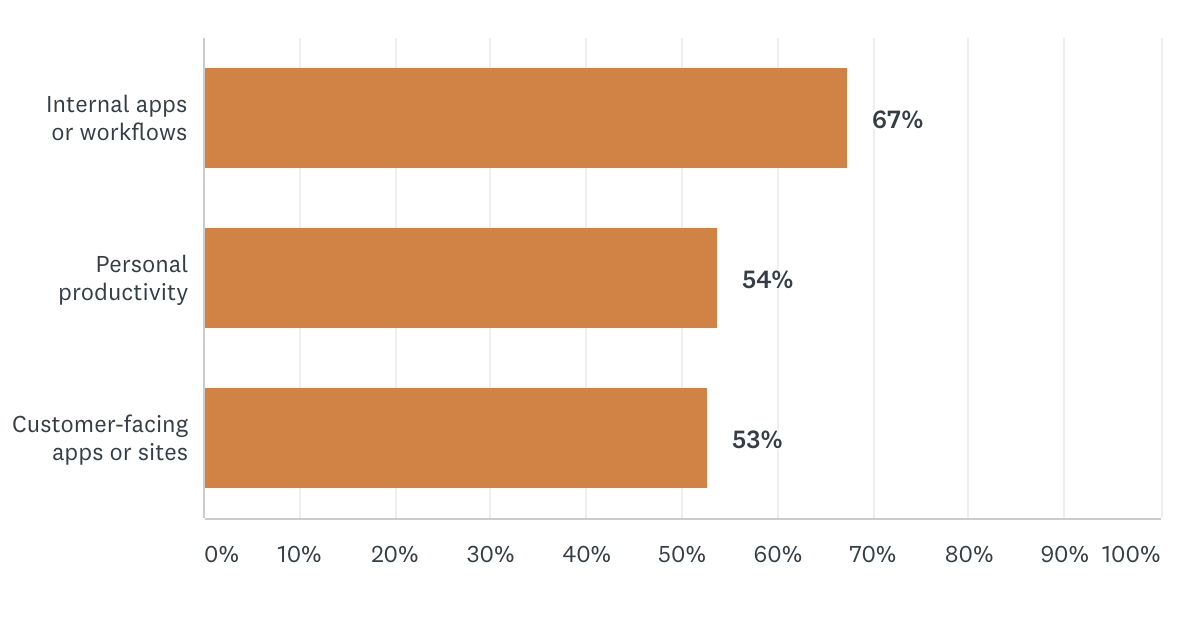
It’s interesting to note that 54% also reported using no code tools for their own personal productivity. “I’ve got a job to get done, and I can save time by setting up this little automation.” The potpourri of marketing operations responsibilities has a bear unlimited supply of such opportunities.
It also suggests a healthy evolution of the relationship between marketers and martech, with people increasingly bending the technology to their desired processes — rather than bending their processes to the technology.
Finally, it’s often debated if no code is a gateway drug to “real” programming — or if you need such programming skills to really take advantage of no code tools.
I suspect that debate will continue for some time, but the data from this survey implies that you don’t have to be a “real programmer” to harness the power of no code solutions. 71% of the respondents said they either had no coding skills or just a little bit, such as familiarity with HTML.
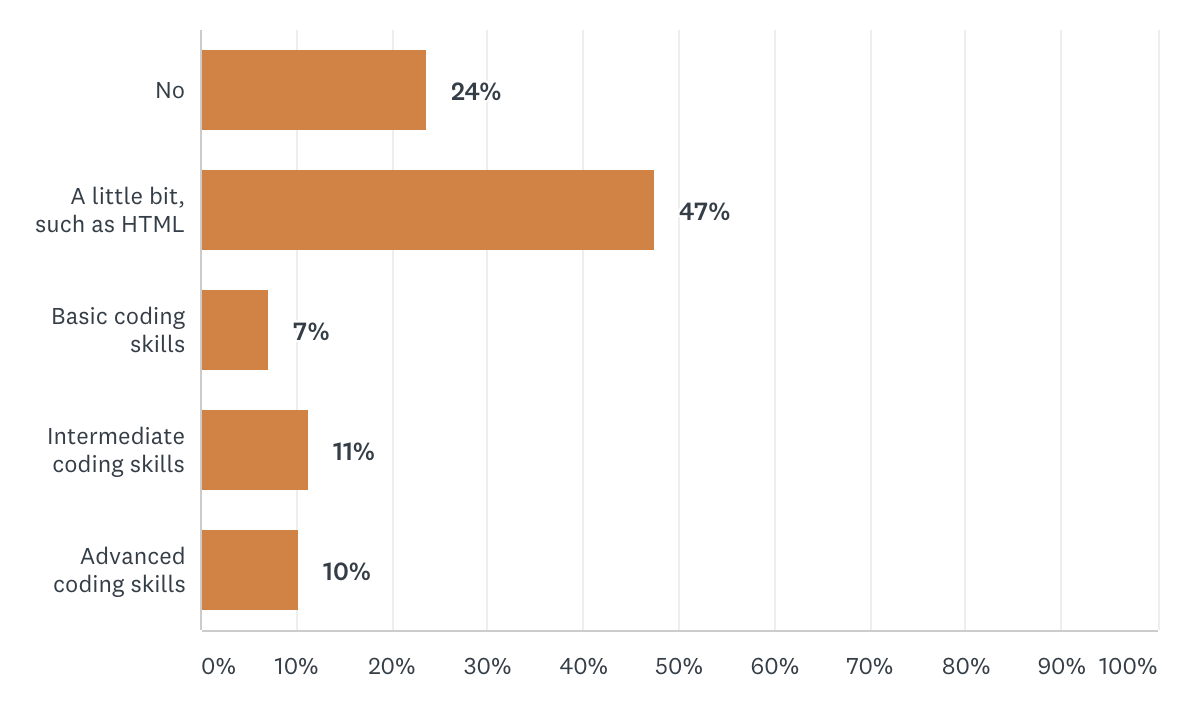
21% of participating claimed to have intermediate or advanced coding skills. For them, no code is a practical, time-saving short-cut. Just because you could write something from the ground up in Java, doesn’t necessarily mean you should.
Only a small 7% reported having basic coding skills. This bimodal distribution — either no real coding skills (71%) or professional-level coding skills (21%) — doesn’t seem to support the “gateway drug” theory. You’d expect a more even distribution of coding skill advancement among no code users if that were true.
Why learn to code if you don’t have to?
I realize that will set off a heated debate about the importance of understanding the concepts of coding to be effective as a no code practitioner. Which I generally agree with. But that’s a post for another time.
The post How marketing operations and martech professionals use “no code” tools appeared first on Chief Marketing Technologist.
from Chief Marketing Technologist https://ift.tt/3idYpDb
via IFTTT
Comments
Post a Comment