
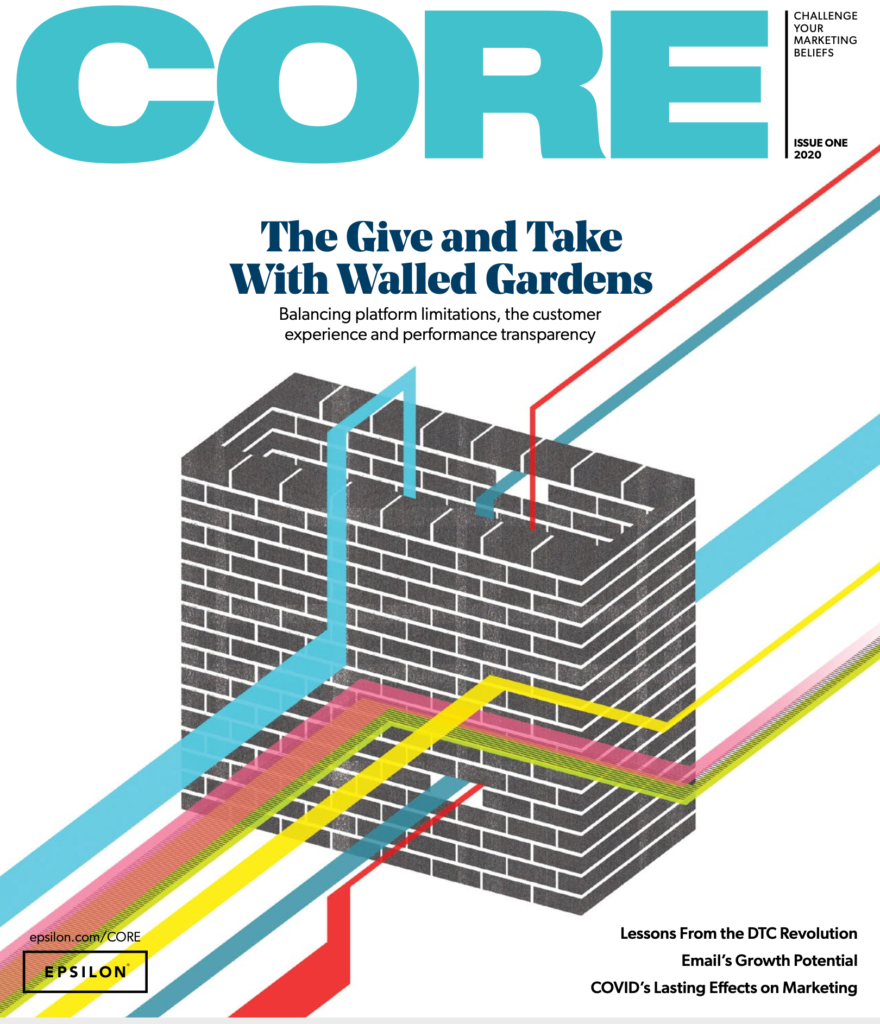
The first issue of CORE Magazine published by Epsilon features new research by Brian Solis on disruption, the Novel Economy and new consumerism.
The Ultimate Disruption
As the virus swept the globe, brands changed how they inter- acted with customers due to social distancing and stay-at- home orders. Consumer perspectives about making purchases also shifted with fluctuations in the stock market, skyrocket- ing unemployment and supply chain issues. As many people lost their jobs and those still earning a paycheck worried about future layoffs, impulse purchasing became infrequent. Messages that resonated with consumers a few weeks prior suddenly fell flat and even seemed insensitive.
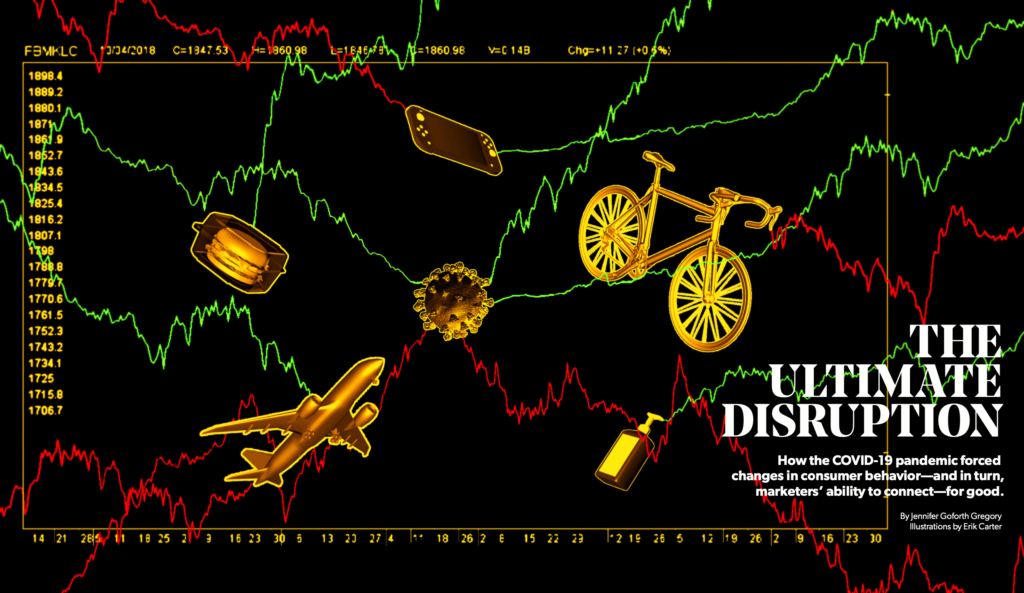
Even as physical businesses open up, the influence of social distancing is likely to stay with consumers longer term. Many of these new behaviors may turn into long-term habits instead of short-term solutions executed in crisis mode. “You need to re-create the customer journey for these times, and then prioritize investments based on what you learn,” says Brian Solis, global innovation evangelist at Salesforce and author of X: The Experience When Business Meets Design.
Marketers need to take a fresh look at what people are searching for, where they’re going, what they value and what they’re finding, Solis says.
“COVID-19 is going to affect the platforms you use, the content you create, the offers you design and campaigns to support those offers,” Solis says. “Essentially, you have the opportunity to start from scratch and build those touch- points, hopefully investing heavily in artificial intelligence and machine learning across the journey.”
But the stakes are also much higher: The gap between hit and miss has gotten wider in this time of increased sensitivity and anxiety.
Moving forward, Solis advises marketers to look at the jour- ney—not just the individual touchpoints they represent for a complete overview of the customer’s experience and where to add value. “This is an opportunity to be open-minded, think differently and allow yourself to not know all of the answers,” he says. “During these times, organizations need to most of all find more opportunities to be more human.”
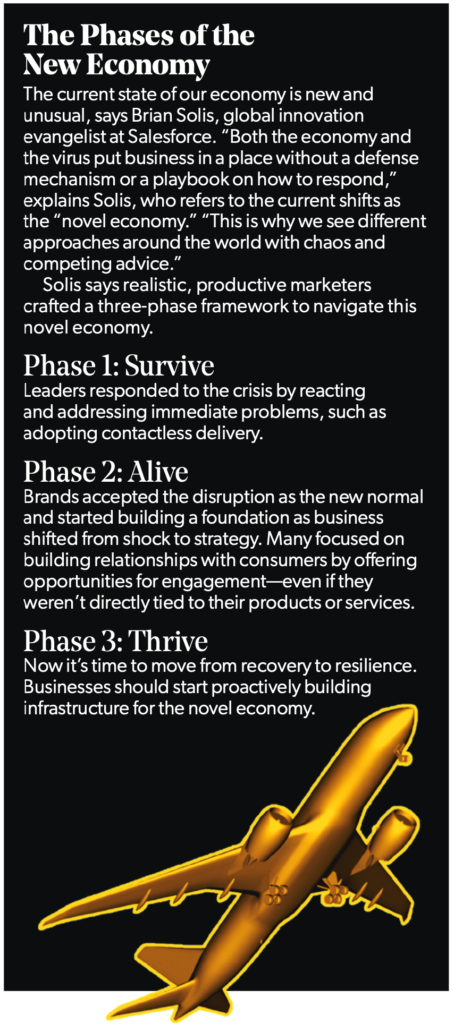
The Three Phases of the #NovelEconomy
The current state of our economy is new and unusual, says Brian Solis, global innovation evangelist at Salesforce. “Both the economy and the virus put business in a place without a defense mechanism or a playbook on how to respond,” explains Solis, who refers to the current shifts as the “novel economy.” “This is why we see different approaches around the world with chaos and competing advice.”
Solis says realistic, productive marketers crafted a three-phase framework to navigate this novel economy.
Phase 1: Survive
Leaders responded to the crisis by reacting and addressing immediate problems, such as adopting contactless delivery.
Phase 2: Alive
Brands accepted the disruption as the new normal and started building a foundation as business shifted from shock to strategy. Many focused on building relationships with consumers by offering opportunities for engagement—even if they weren’t directly tied to their products or services.
Phase 3: Thrive
Now it’s time to move from recovery to resilience. Businesses should start proactively building infrastructure for the novel economy.
You can read the article below or the entire magazine here.
The post The Ultimate Disruption: The COVID-19 pandemic led to a seismic shift in consumer behavior appeared first on Brian Solis.


 from Brian Solis https://ift.tt/2XOzRZE via IFTTT
Comments
Post a Comment