As a consumer—it would be nearly impossible to count the number of email funnels that have hit your inbox.
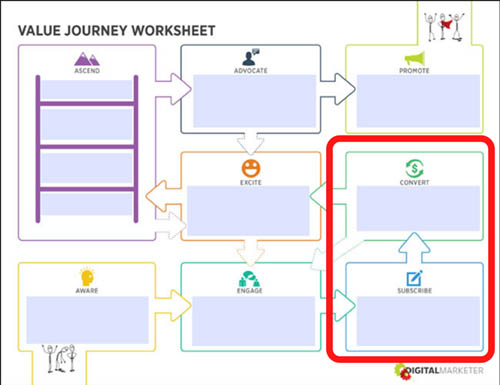
We can safely say, it’s been a lot. Businesses love email funnels because they swiftly move new subscribers toward their first purchase. Let’s take a look at the Customer Value Journey to get an idea of where your prospects are when they become subscribers.
The Customer Value Journey is the journey a prospect takes from finding out a business exists (Stage 1: Awareness) to becoming such a raving fan of it they’re actively promoting the business like a salesperson only they pay you (Stage 8: Promote). 
When we talk about email funnels, we’re talking about the shift of a prospect choosing to become a subscriber (Stage 3: Subscribe) to buying your first offer (Stage 4: Convert).
Email funnels are a big deal in the marketing world because they work… really, really well. People are still tuned into their inboxes, check out these statistics from OptinMonster:
- 99% of email users check their email every day
- 85% of the people you send an email to will receive your email
- More than 75% of teenagers still use email
Yep, you don’t need to figure out how to renegade on TikTok anytime soon; emails can reach every demographic you’re interested in.
How Email Funnels Work
Email funnels turn subscribers into customers by using specific strategies that sell products or services. We’ll get into those strategies in a minute, but first, take a look at the return businesses are seeing on their email funnels:
- For every $1 spent, email has an average ROI of $38
- Segmented campaigns can reach a 760% increase in revenue
- Compared to Facebook or Twitter, email is 40 times more effective at acquiring new customers
The number of emails you use in your funnel is going to depend on what you’re selling, but generally you’ll use a minimum of 4 and a maximum of 7. If your subscriber hasn’t converted by your seventh email about this offer—then you don’t want to keep bombarding them with it.
When you’re putting together your email funnel, you’re going to be highly focused on the copy you use. There are 4 emotional triggers to use in your email funnels:
- Gain: What does the subscriber gain by buying the product/service?
- Logic: Why does buying the product/service make total sense for them?
- Fear: What happens if they don’t buy the product/service?
- Scarcity: How long do they have to choose to buy this specific product/service?
Each email is going to follow a similar template:
- Introduction: Give a warm introduction to what you’re about to talk about (you wouldn’t walk up to somebody and start talking without at least saying a few introductory words first)
- Body: Use gain, logic, fear, and/or scarcity to show them why this offers matters to them NOW
- Close: Craft a clear call to action
- P.S. (Not always used): Add in extra gain, logic, fear, or scarcity
Here’s an example of an email funnel we ran for our Napkin Challenge. The first email uses logic and curiosity to drive the subscriber to want to create a marketing plan that gets them customers.
Subject Line: The napkin that cleaned up a $248k mess
Preview Text: A how-to guide for fixing a BIG problem
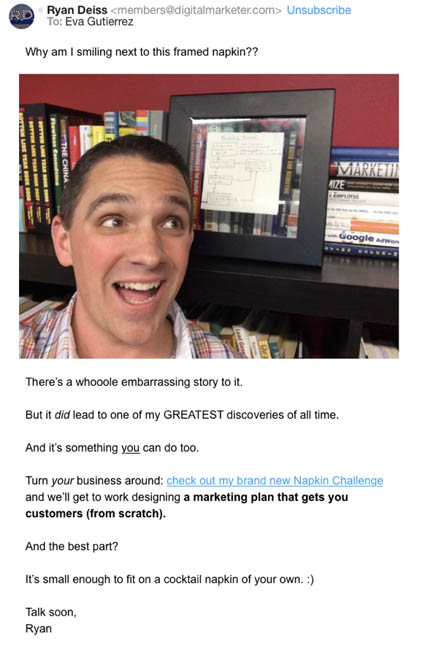
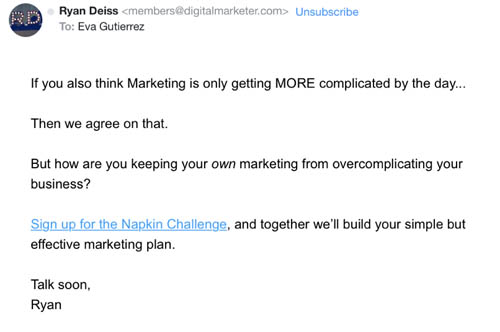
Touching on the fear business owners have over the complication of marketing these days, our second email was quick and to the point.
Subject Line: why is this so complicated?
Preview Text: Maybe marketing isn’t the problem.
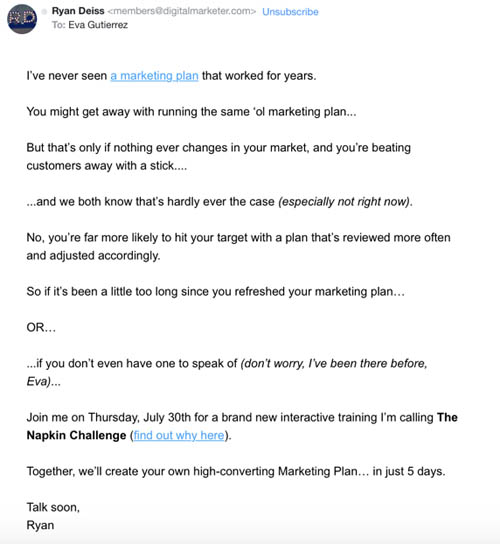
And then our third email used everything we know about the pain points of our avatars (thanks to the Customer Avatar Worksheet) to show them what they would gain from taking part in The Napkin Challenge.
Subject Line: time to hit the reset button
Preview Text: There’s no “do over” button, just “do better”
If you want to look at more email funnels, take a look at your inbox. Now that you’re familiar with what an email funnel is, you’ll realize that you’ve gotten a lot of these emails in the past. Some may have worked well (you bought the product) and others not so well (either the funnel was off, or you weren’t their target avatar).
Email funnels are a BIG part of marketing strategies because they’re the platform that moves subscribers from Stage 3 of the Customer Value Journey to Stage 4, the stage where they become first-time customers of your business.
And that’s a big deal for every business. 
The post What is an Email Funnel? appeared first on DigitalMarketer.
from DigitalMarketer https://ift.tt/2Y2ciwI
via IFTTT
Comments
Post a Comment