On August 25th, nearly a month before the official first day of the new season, Starbucks declared it fall.
It didn’t matter that it was still reaching record high temperatures; it didn’t matter that leaves wouldn’t start falling for weeks or even months; it didn’t matter that the corn mazes were still only knee high.
All that mattered was that Starbucks fans wanted it to be fall. They desperately wanted an escape from the hellish summer than most of us have been experiencing.

So Starbucks crafted the perfect autumnal alternate universe, where you could wear a scarf and look at the leaves and drink a PSL without sweating through your facemask.
And if you think that campaign was met with a raised eyebrow and a glance at the calendar, then you clearly underestimate the power of telling your customers the story they want to hear.
See, good marketing sells the transformation, rather than the product itself. You frame it as the solution to a problem. Before, things were bad. But now that you have this or have done that, your after state is wayyy better.
But if you want really good marketing—like the marketing that has pumpkin cream cold brew coffees sold out every time I try to buy one—you’ll need to craft that transformation into a story.
Humans connect to emotion and narrative, so if you set up your marketing to tell a story, especially a story that your customers want to see themselves in, you’ll find yourself raking in the pumpkin spice… er… I mean the sales.
This is particularly important around the holiday season, when anyone and everyone is trying to sneak into the wallets of your customers. Your best chance at being one of the lucky few is to strengthen the bond with your customers. Build a connection through storytelling.
If you are still unsure about how to create a story around your product, we’re here to help. We’ve broken this process down into 3 steps and have some examples you can pull inspiration from throughout.
(And if the smell of pumpkin spice in the air is starting to give you the holiday promotion stress sweats, just download our FREE 2020 Holiday Marketing Preparedness Plan.

We’ve mapped out when you should start preparing for the major holidays through the end of 2020, exactly what you will need, when you should have everything ready to go, and even when you should start your promotions.)
Figure Out What Your Customers Want
The first step to creating a great story around your product or service is to know what your customers want. What story do they want to see themselves in?
The best way to figure this out is by turning to your trusty Customer Avatar Worksheet, you know, that thing that defines exactly who your ideal customer is?
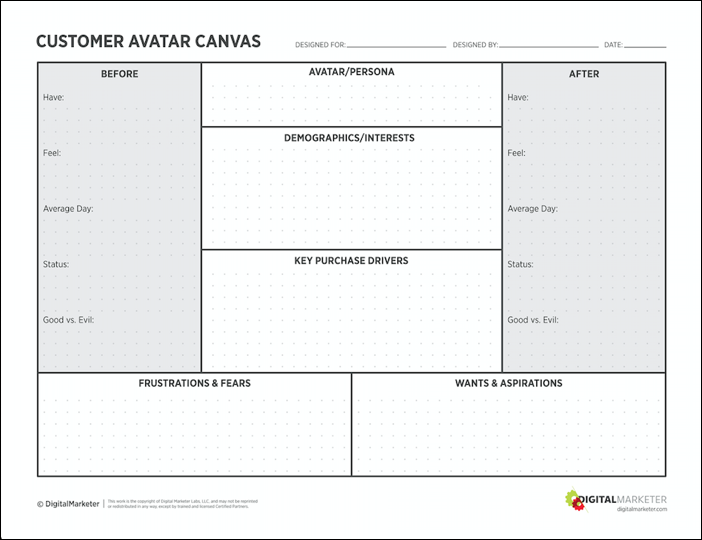
If you’ve filled out your CAW, you’ll know exactly what your customers want and are interested in, what they are afraid of and frustrated with, and what kinds of media they consume.
And if you’ve filled out the Before and After grid, shown above alongside the CAW, you know how your customers are feeling before becoming a customer and how they should feel after buying your product or service.
With all of these resources, and a good working knowledge of your ideal customer, you should be able to easily craft a story that shows the transformation.
If we look to Starbucks as an example, they knew just how much their customers wanted it to be Fall. They understood the frustration with the hot weather or the fear of the current social chaos.
So they created a story about falling into the new season (the pun was just a happy coincidence), and targeted their marketing efforts into creating a relaxing, enjoyable fall experience.

And their biggest marketing push (aside from the drinks themselves) was for the fall hotline they created.
Customers could call in and hear the sounds of fall, long before the actual season hit them. Not only did this hit on the exact pain point, but it crafted a narrative around the transformation.

They knew exactly what their customers wanted, and delivered it in their marketing efforts.
Decide How Your Product or Service Fits In
Once you know what your customer wants, your next step is to decide how your product will fit in.
With some holidays, you might be providing a great gift that will charm and impress their loved ones.
Or, if you are like David’s Tea (in a similar way to Starbucks), you might be providing a comforting environment and a joyful experience.
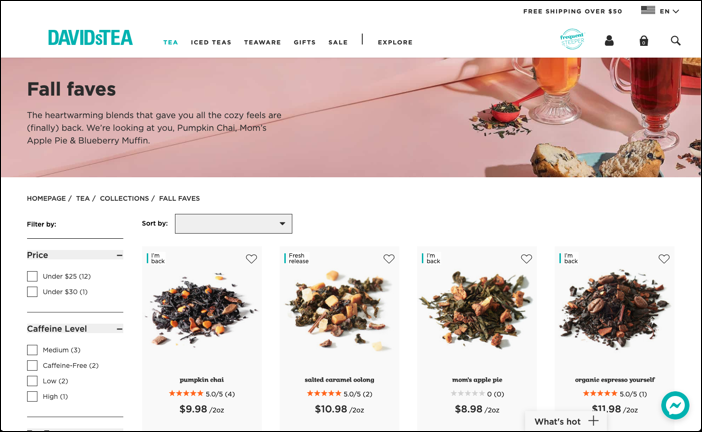
However your product fits in, make sure to keep that action as a central point in your marketing story, and keep it as consistent as possible across all platforms and content.
You can see how David’s Tea used the same language, “this heartwarming blend will give you all the cozy feels” on both their product page and their Facebook ad.

Keeping your story the same on different platforms not only means you are sure to reach all your customers, but it helps solidify the emotional response your customer will have.
For David’s Tea, any potential customers who saw the ad and thought, “ohh I need some coziness in my life,” they don’t get jarred by a different message when they hit the landing page.
Craft a Story Where Your Customer is the Main Character
The central idea of creating a marketing “story” is that your customer is the star. You want the messaging to center around the customer and how they will feel and change rather than your product.
You can see here with this BarkBox copy, they have gone even further with their story than the other examples, going so far as to cast their customers’ dog (arguably the real customer, though maybe not the one with final buying power), into a story about a lovely fall drive.

Anyone with a dog (and a heart) will immediately be drawn into the story and see themselves and their furry best friend in this car ride.
And then when they read through the rest of the product description, they are still within that relaxed, happy emotional state, and are drawn closer to the products by extension.
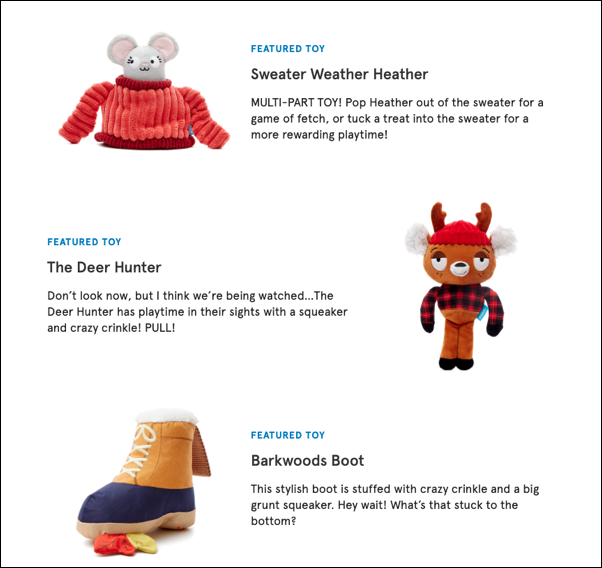
Plus, who wouldn’t be charmed by a sweater wearing mouse?
No matter what your story is, make sure you are making your customer the main character. Cast them as the star, and they will make a better connection to your brand and the product you are targeting them with.
By crafting an emotionally driven story that hits on the desires of your audience, you’ll be sure to cut through the noise of the season and solidify your customers’ love for you and your brand.
And if you want to feel better prepared to put your holiday marketing story into action, download our 2020 Holiday Marketing Preparedness Plan.
After all, what is a better gift this holiday season than having a handle on your marketing campaign before the season even starts? Well, maybe a PSL… but that could just be me.
The post How to Craft the Story for Your Holiday Marketing Strategy appeared first on DigitalMarketer.
from DigitalMarketer https://ift.tt/2ZNL7qp
via IFTTT
Hii
ReplyDeleteNice Blog
Guys you can visit here to know about
twitter marketing india