30-second summary:
- With remote work and the peak season coming in, creating an internal communication plan has become a massive priority for upper management to facilitate great teamwork.
- How can companies create internal communication plans that not only work in the short term but can also be utilized for years to come to achieve steady team growth?
- Eight great steps to improve your SMB digital marketing team’s internal communication plan and optimize successful outcomes.
Creating an internal communication plan has become a massive priority this year.
With more companies working remotely, documenting processes and making them accessible to teams has taken precedence over many other tasks.
Since team members cannot walk over to each other’s desks for a quick chat, it has become key for upper management to determine how best to facilitate teamwork.
Overcoming communication barriers in such an environment will take planning—especially as this remote working situation is set to continue for some time.
How can companies create internal communication plans that not only work in the short term but can also be utilized for years to come to achieve steady team growth?
We share a step by step guide that will help marketing teams communicate better in the long run.
1. Audit established internal communication plans
Before you go steaming ahead to create a new internal communication plan, you need to look at what you already have—or whether you have something at all.
Analyze your documentation to see whether you have the most up-to-date information. Examine your process flow to determine whether obstacles are being overlooked.
Study how effective your former communication plans had been—did you reach the goals set out for it? If not, what areas require improvement?
It’s also worth creating a company-wide survey to get a better understanding of where your employees think the company is.
Are they comfortable with the way communication is handled? Would they prefer changes in a particular area?
A thorough audit, like in the example below, will make it much easier to start creating an internal communication plan that helps your company grow.
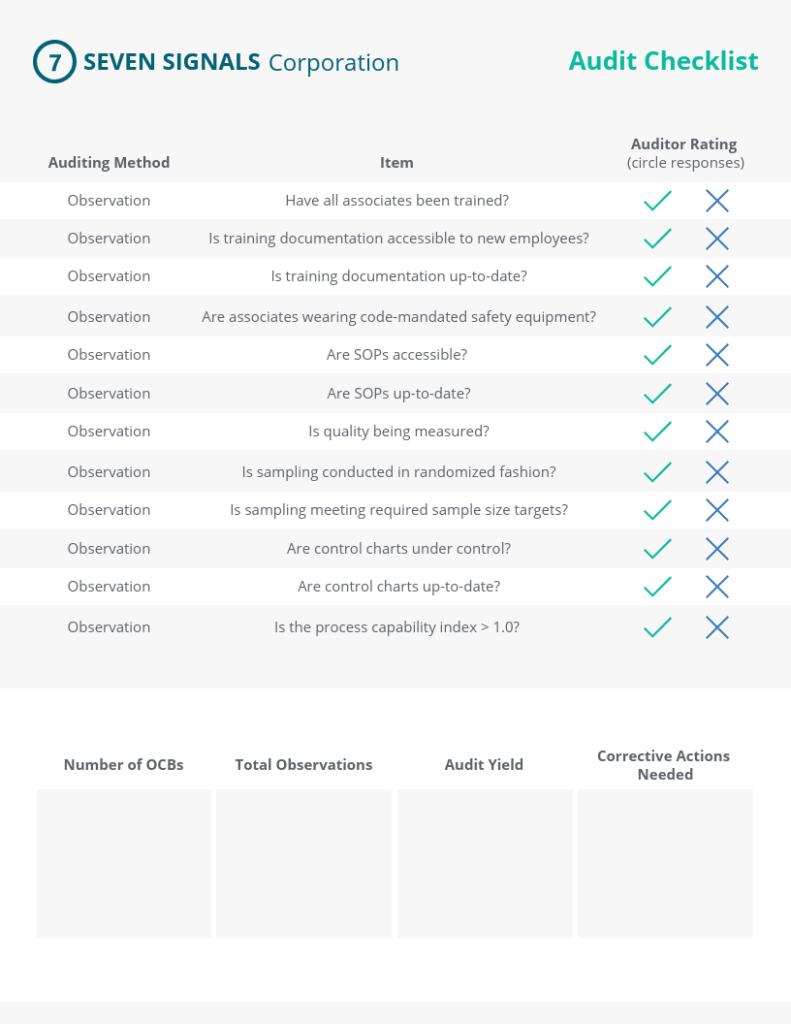
Source: Venngage
2. Internal communication plan metrics
Now that you’ve determined what worked and didn’t in your previous internal communication plans—or that you do need one—you need to determine metrics for it.
Some metrics to aim for include:
- Employee reach
- Employee engagement rates
- Employee retention rates
- Message open rates
- Message click rates
- Level of productivity
- Employee net promoter score
- Revenue increase
Your SMB may not be focused on all of these metrics—but you should aim for at least a few of these in your initial plans.
You don’t want to have a narrow focus such as increasing productivity rates that don’t improve engagement or revenue.
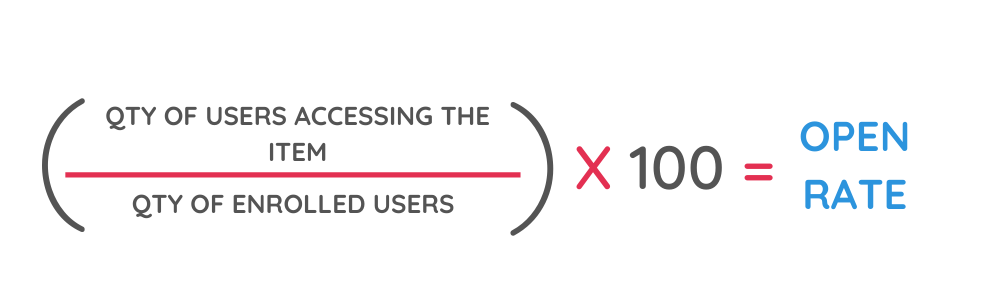
Instead, choose a set of metrics that you can calculate, and that won’t be unattainable, like the open rate below used by Contact Monkey.
3. Setting goals for internal communication plans
Miscommunication can cost SMBs an average of $420K in losses, found SHRM. Which is why internal communication plans are so necessary.
When you determine your metrics, you also need to set goals for your company and how the internal communication plan will tie into those goals.
How do you choose a goal for your plan that will help your marketing team grow? By using the SMART goal-setting method:
- Be specific about what you want to accomplish, and use simple language to convey it
- Choose a measurable goal that you can analyze
- Make the goal attainable so your communications don’t aim for something you can’t get
- Your goal should be relevant to the team and your overarching company goal
- The goal should also be time-based so that your plan doesn’t miss deadlines
Here’s a visual overview of SMART goals that your team can refer to in the future.

Source: Venngage
4. Identify internal communication plan stakeholders
No matter the size of your company or marketing team, your internal communication plan needs to be targeted towards specific stakeholders.
This is because not all messages are relevant to every member of the team.
The way a website design team functions will differ from the PR team, or social media team, like in this example.
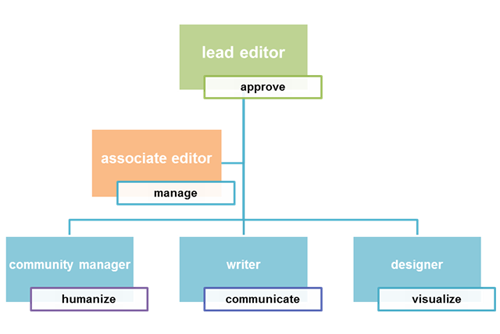
You also don’t want to bombard other teams with marketing information that won’t be important to them.
Creating a one-size-fits-all plan for your company will only cause more misunderstandings—that is why you need to outline your target audience before creating a plan.
Use behavioral targeting methods to understand how, when, and why your team members need to be reached. This will make communication more effective.
5. Brand your internal communication plan
Branding is an essential part of external communications, but it should also be acknowledged for internal communication plans.
While brand symbols like logos, colors, and fonts are meant to evoke a connection between companies and consumers, it’s also necessary to maintain consistency within the company.
Branding ensures that your team is seeing the same message design internally and on your external channels.
So, make sure your internal newsletters and your business letter template, like this example, are updated regularly to reflect your branding styles.
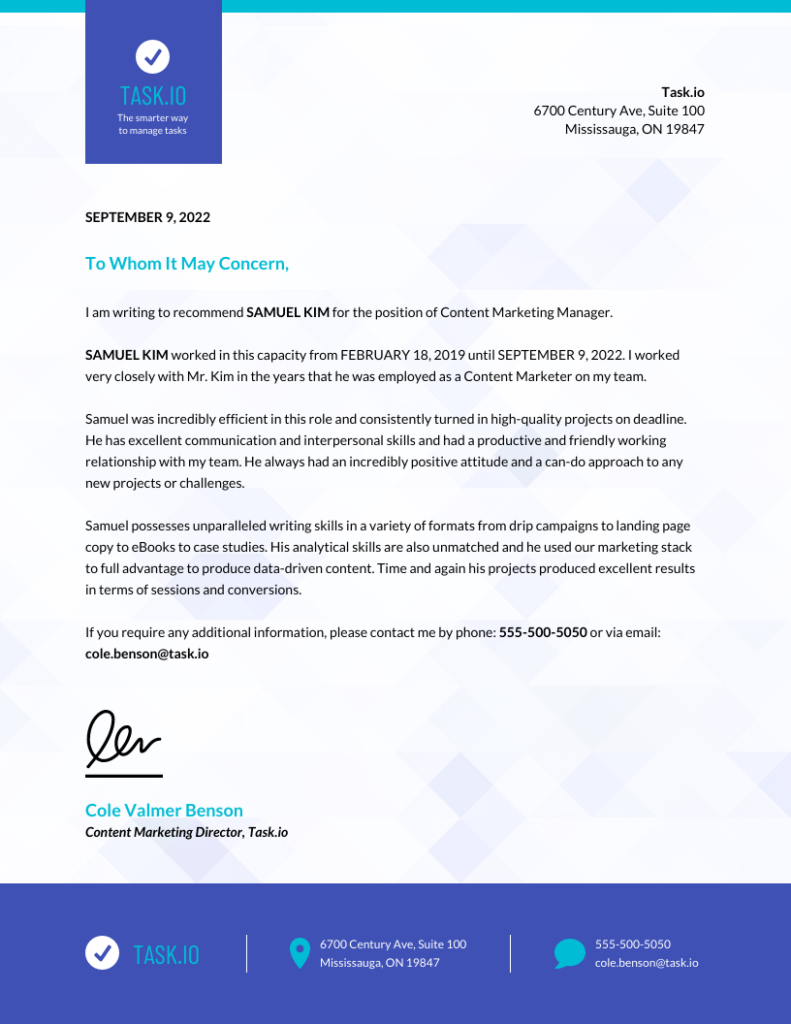
Source: Venngage
But remember that branding isn’t just about the visual appearance of your company—your tone and messaging should also be consistent in your communications.
Don’t adopt a serious tone internally, only to be jovial with customers—your team is in many ways a customer, as well.
Your messaging should also be consistent—don’t tell external parties something that your marketing team doesn’t already know.
6. Design the internal communication process
One of the key aspects of an internal communication plan is workflow—your team should know whom they need to send content and strategies for approvals.
You should include a flow chart in your plan—these demystify approval processes so team members send their material to the right people in the right order.
7. Channels to implement internal communication
There are numerous channels where you can implement your internal communication plan:
- Emails
- Intranet
- Internal newsletter
- Closed social media groups
- Project management tools
- Slack, or similar alternatives
- Video conference calls
Most of these channels are completely free to create and maintain but some of them can be time-consuming, as you can see from this chart.
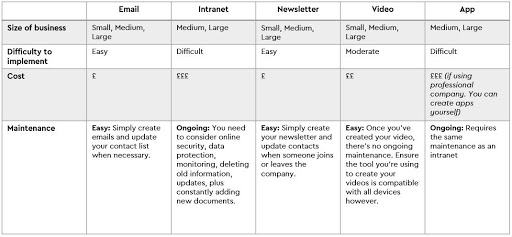
Emails aren’t as instantaneous as they used to be and many people have found themselves using them solely for external purposes.
On the other hand, instant messaging tools have allowed remote workers to keep in touch with each other and respond immediately.
Your SMB may not have the ability to institute an intranet, but you may be able to design newsletters to send to your team.
Include which channels you will be using in your plan and for what kind of communication so that team members are aligned and know where to reach out for responses.
8. Regularly evaluate your internal communication plan
If you think your job is done because you’ve created your internal communication plan, I’m afraid that isn’t the end of it.
Your plan will need to change to reflect your marketing team’s structure, your company’s new goals, and even the external environment.
Be prepared to assess the following on an annual basis:
- Email open rates
- Click-through rates
- Channels used
- Feedback from your team
- Common barriers
- Areas for improvement
Once you determine how these areas have performed you can redesign your communication plan.
Conclusion: Create an internal communication plan that keeps your team aligned
Creating an internal communication plan that works takes time and energy. You will also need to A/B test your tools and processes to define the ones that work best for your company.
To recap, here’s how you can create an internal communication plan that works:
- Audit your current plans
- Choose your metrics
- Set plan goals
- Identify stakeholders
- Brand your documents
- Design the process
- Choose your channels
- Evaluate your plan
By following these steps, you can create an internal communication plan that will help your marketing team become aligned with your company.
Ronita Mohan is a content marketer at Venngage, the online infographic maker and design platform. Ronita regularly writes about marketing, sales, and small businesses.
The post Internal communication plan: How SMB marketing teams can achieve growth appeared first on Search Engine Watch.
from Search Engine Watch https://ift.tt/38Bim5e
via IFTTT
Comments
Post a Comment